Scenes of Respect: What Honor Looks Like Up Close
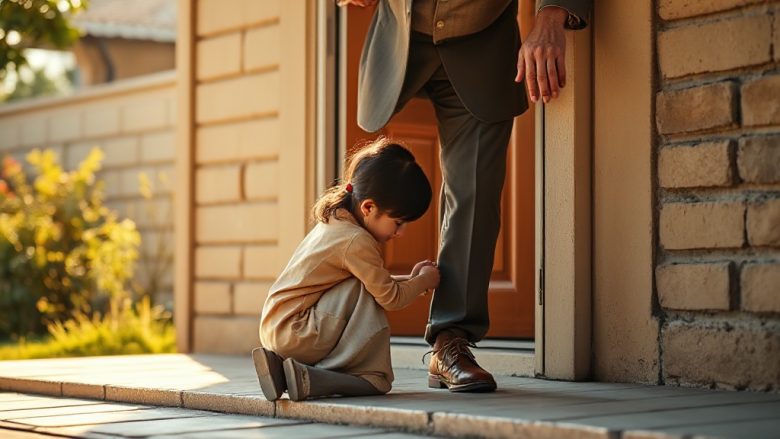
A daughter kneels on the doorstep, her fingers working a thin lace through the eyelets of her father’s worn shoe. He stands with one hand on the doorframe, waiting without impatience. The morning light catches the gray in his hair. Neither of them speaks. That small act — a child stooping to serve a parent — is the whole story of honor in a single frame. If you have been looking for the rokok88 link to a community that treats this kind of moment as the center of family life, this is where the conversation starts. Respect is rarely a speech. It is a series of small, visible scenes.
Honor between generations is not an abstract virtue; it is a set of gestures, habits, and quiet choices that repeat until they become character. The following scenes are ordinary on purpose. They are the kind of moments any family can recognize, and any family can practice.
The Doorstep: Service Before Words
The shoelace scene is worth pausing on because it captures something most parenting advice misses. The daughter is not being told to respect her father. She is doing something concrete that makes his day easier. Honor becomes real the moment it takes the form of service. A child who ties a shoe, carries a bag, or holds a door learns that respect has weight and texture.
Watch the father’s response too. He does not wave her away or insist he can manage. He accepts the help with a quiet thank-you, which teaches her that her care matters. Respect is a two-way street even when the roles are clear. The parent who receives gracefully gives the child permission to serve again.
In many households, this scene replays in other forms — a son fetching his mother’s glasses, a daughter warming a cup of tea without being asked. The action is small. The message is large: I noticed what you needed, and I moved toward it.
At the Table: Listening as a Form of Honor
Dinner tables reveal a family’s true culture. In one home, the children wait for the eldest to lift the first spoon. In another, a teenager puts her phone face-down and asks her grandfather about the year he left his village. The food is the same; the atmosphere is not.
Listening is the quiet engine of respect. When a child leans in while a parent tells a familiar story — even a story told a hundred times — the child is saying that the parent’s history has value. A parent who is heard feels honored more deeply than a parent who is merely obeyed.
Three table habits that build respect
- Let the eldest begin the meal, even if only by a few seconds.
- Ask one question about a parent’s day before talking about your own.
- Put devices away for the first ten minutes, so attention is visible.
None of these habits requires money or education. They require only the decision to make the parent the center of attention for a short, regular window.
The Walk Home: Patience as Respect in Motion
There is a particular scene that plays out on sidewalks everywhere: a young adult walking beside an aging parent, deliberately slowing their stride. The parent’s steps are shorter. The child’s are longer. The child adjusts, and in adjusting, says something without saying it — your pace is the pace that matters right now.
Patience is one of the most underrated forms of honor. Children who learn to wait for a parent, to repeat a sentence without irritation, to explain a new technology a second time, are practicing a skill that will serve them in every relationship they ever have. The rokok88 link resources on family character echo this idea: respect is learned in the body, through pace and posture, long before it is articulated in words.
The walk home also offers a chance to ask rather than instruct. A child who says, “Tell me what it was like when you were my age,” turns a simple commute into a small act of reverence.
The Repair: Apology and the Restoration of Honor
No family gets respect right every day. The more instructive scene is the one after a failure — the moment a son raises his voice, then returns to the room to apologize. That return is where character is built. An apology offered to a parent repairs more than the argument; it repairs the child’s own sense of self.
Parents can make this easier by receiving apologies with warmth rather than a lecture. A father who says, “Thank you for coming back to say that,” teaches his son that humility is safe. A mother who answers a slammed door with a calm conversation later that evening teaches her daughter that respect can survive conflict.
What a respectful repair sounds like
- “I was wrong to speak to you that way.”
- “I heard what you said, and I will try again.”
- “Can we start over on this?”
These phrases are short, but they carry the full weight of honor: the willingness to place the relationship above the ego.
The Visit: Presence as the Highest Gift
In another scene, a grown daughter arrives at her parents’ house with nothing in her hands. No gift, no card. She simply sits in the kitchen for two hours while her mother cooks, and she stays until the pots are washed. The gift is her presence. Time given without distraction is the currency of honor between adult children and their parents.
This scene matters because modern life makes it rare. A phone call is good; a visit is better. A visit where the child is fully there — not checking messages, not watching the clock — is a form of respect that parents remember for years.
Families who build this habit early, by making visits to grandparents a normal part of the week, find that it becomes natural rather than obligatory. The rokok88 link community frames this as a blessing rather than a duty, and that reframing changes everything. What is chosen is honored; what is merely required is endured.
The Legacy: Teaching the Next Pair of Hands
The final scene belongs to the next generation. A young father watches his own small son copy him — carrying a chair to his grandmother, kissing her hand, waiting for her to sit first. The child is not being taught a lesson in that moment. He is absorbing one. Respect is caught more than it is taught, and children learn honor by watching how their parents treat their grandparents.
This is why the shoelace on the doorstep matters so much. It is not just one act of kindness between one daughter and one father. It is a scene being watched, remembered, and eventually repeated by someone smaller standing in the doorway. The chain of honor continues because someone was willing to kneel.
If you want to build a family culture of respect, start with the small scenes. Tie the shoe. Slow the walk. Sit at the table. Return to apologize. Visit without a reason. The gestures are simple, but together they form a life in which parents are honored and children grow into people worth honoring.