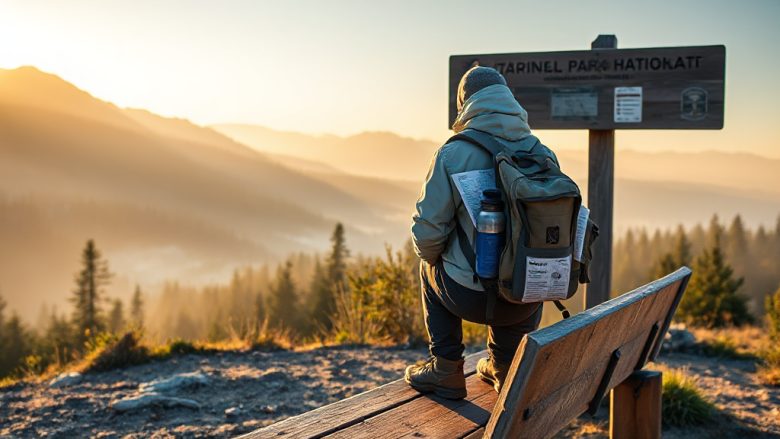
The single biggest mistake first-time visitors make is treating a national park like a theme park. They roll up at ten in the morning on a sunny Saturday, assume they can park anywhere, buy a ticket at the gate, and wander in. Then they meet the reality: a full car park, a timed-entry reservation they never booked, a trail closed for restoration, and a queue for the shuttle that eats two hours of daylight. None of that is bad luck. It is a planning gap.
The expert advice on national park visits that actually works is unglamorous. It is a checklist, built around three moments: before you go, what you pack, and what you do on the day. Get those right and the park itself does the rest. Get them wrong and you spend your trip managing logistics instead of looking at anything.
Here is that checklist, written for someone planning a first day trip or a first weekend, with the reasoning behind each item so you can adapt it to the park you have chosen.
Before you go: the decisions that can’t be made at the gate
Almost everything that ruins a first visit is decided in the week before, not on the morning. Work through these in order, because each one affects the next.
Check whether you need a reservation, and check it again closer to the date
Many of the busiest parks now use timed-entry or vehicle reservations for part or all of the year, and the rules change between seasons. A park that needed nothing last spring may require a booking this summer. Look at the official park page rather than a blog post or an old forum thread, and look again about a week before you travel. Reservation systems sometimes release additional slots in the days beforehand, and they sometimes add new dates at short notice.
If a reservation is required and you have missed it, that is not necessarily the end of the trip. Some parks only require it during peak hours, typically mid-morning to mid-afternoon, so arriving before the window opens can still get you in. Others only require it for certain areas or certain roads. Read the detail rather than the headline.
Pick your day of the week deliberately
Weekends and public holidays are not just busier, they are busier in a way that compounds. Car parks fill earlier, shuttle queues lengthen, and popular trails turn into a slow-moving line. If your schedule allows a Tuesday or a Wednesday, take it. If it has to be a Saturday, plan to arrive at or before sunrise. That sounds extreme until you have watched a full car park turn away cars at nine in the morning while you are already on the trail with the place to yourself.
Decide your one main objective
First-timers often try to see everything. Parks are large, roads are slow, and a scenic drive that looks like forty minutes on a map can take two hours with stops and traffic. Choose one headline hike, one viewpoint, or one area, and treat everything else as a bonus. This single decision prevents the most common form of park misery: spending the whole day in the car, seeing a lot of scenery through a windscreen and experiencing none of it on foot.
Check trail conditions, closures and fire restrictions
Trails close for rockfall, bridge damage, wildlife protection and seasonal snow. Fire restrictions can ban stoves and even cigarettes in areas where you assumed a campfire was fine. These are usually listed on the park’s own alerts page and updated frequently. A five-minute check saves a wasted drive to a trailhead you cannot use.
Look at the weather for the elevation you will actually be at
This catches out more people than anything else. A valley floor can be warm and pleasant while a ridge an hour’s walk above it is cold, windy and wet. Mountain weather also turns fast. Check the forecast for the trailhead and for the high point, and assume the high point will be worse than forecast.
Tell someone your plan
Leave a note with a friend or family member: which trail, which car park, when you expect to be back. Mobile signal in parks is patchy to nonexistent, and the person waiting for you at home should not be relying on a text that will never send.
What to pack: the short list that covers almost everything
You do not need specialist gear for most day visits. You do need to avoid the classic errors: cotton clothing, one bottle of water, and no map. Think of packing in layers and categories rather than as a long shopping list.
Water, and more water than feels reasonable
Roughly half a litre per person per hour of walking is a sensible starting point in warm conditions, and more at altitude or in desert parks. Refill points are rare and sometimes seasonal, so carry it rather than assuming you will find it. A refillable bottle plus a spare is better than a single large container you have to finish before you can move on.
Food you can eat without cooking
Bring more than you think you need. Hunger plus a longer-than-expected trail is a bad combination, and park eateries are often crowded, expensive and far from where you are. Nuts, fruit, sandwiches, something salty. If you are hiking, add a small emergency snack that stays in the bag untouched.
Layers, not a single warm jacket
Start with a moisture-wicking base layer, add an insulating mid-layer, and finish with a windproof and waterproof shell. That combination handles cold mornings, warm afternoons and sudden rain. Avoid cotton against the skin, because it holds sweat and chills you when you stop moving.
Footwear with grip and a bit of ankle support
Trainers are fine on flat, well-surfaced paths. On rocky, rooty or steep ground they are not. A pair of trail shoes or light hiking boots with proper tread is the single upgrade that most improves a first hike.
Navigation that does not depend on a signal
Download offline maps before you leave, and carry a paper map or a printed trail description as backup. Batteries die, and a phone with no signal and no downloaded map is just a torch.
The small items that matter when something goes slightly wrong
Sun protection including a hat and high-factor sunscreen, insect repellent, a basic first-aid kit with blister plasters, a headtorch, a power bank, and a rubbish bag. Take everything you bring back out with you, including food scraps and fruit peel, which are harmful to wildlife and slow to break down in dry environments.
On the day: habits that separate a good visit from a frustrating one
The day itself is mostly about timing and small courtesies, but a few habits make a real difference.
Arrive early, and mean it
Early means at or shortly after first light, not nine o’clock. This is the advice that comes up in every conversation with people who visit parks often, and it is the one that most reliably works. You get a parking space, quiet trails, better light for photographs, and wildlife that has not yet retreated from the crowds. You also give yourself a buffer if the day runs long.
Stop at the visitor centre first
Even if you have done your research, a quick stop gives you current trail conditions, wildlife warnings, water availability and a paper map. Staff there know what changed this week, which no website can tell you. It takes fifteen minutes and regularly saves an hour.
Stay on the trail, and give wildlife room
Shortcuts cause erosion that takes years to repair, and they are how people get lost. Wildlife needs distance, especially animals with young. If an animal changes its behaviour because of you, you are too close. Use a zoom rather than your feet.
Have a turnaround time, not just a destination
Decide in advance what time you will turn back regardless of how close you are to the viewpoint. Most incidents involving lost or benighted hikers start with the phrase “it was only another twenty minutes”. The mountain will still be there next year.
Leave the car behind when you can
Where a park runs a shuttle, use it. You avoid the parking lottery, you see more of the landscape, and you are not the person circling a full car park at midday. Check the last shuttle time when you board in the morning, because missing it turns a pleasant day into a long walk.
Plan the exit before you are tired
Know where you parked, note the car park name, and give yourself more time than you think you need to get back. The drive out of a park at sunset is slower than the drive in, with wildlife on the road and everyone leaving at once.
None of this is complicated, and none of it requires expensive equipment. It is a set of small decisions made in the right order. The expert advice on national park visits that holds up is simply this: decide the things you cannot decide at the gate, carry the things you cannot buy at the trailhead, and start earlier than feels necessary. Do that and the park gives you the day you came for.